A complete approach, from diagnosis to standardization.
Process research and diagnosis
Before proposing solutions, we understand the system. We analyze the complete process to identify constraints, waste, variability, risks, and improvement opportunities through observation, interviews, data, and technical documentation.
Data analysis and root causes
Symptoms are rarely the problem. We use statistical tools, trend analysis, Pareto, Ishikawa, 5 Why, DOE, and multivariate analysis to find the true causes affecting performance.
Process optimization
We design solutions that improve productivity, quality, cycle times, costs, and resource utilization without compromising process stability.
Lean Six Sigma and continuous improvement
We develop structured projects using DMAIC and Lean tools to reduce waste, decrease variability, and generate measurable results.
Management systems and standardization
We design procedures, indicators, audits, visual controls, training, and operational standards that allow improvements to be sustained over time.
Implementation and monitoring
Every improvement needs disciplined execution. We support planning, implementation, and monitoring through KPIs, control dashboards, and change management to ensure improvements truly last.
What this method has already moved on the plant floor.
Unplanned downtime
By standardizing preventive maintenance on printing lines.
Repeat non-conformities
Standardized corrective actions, with every finding traceable.
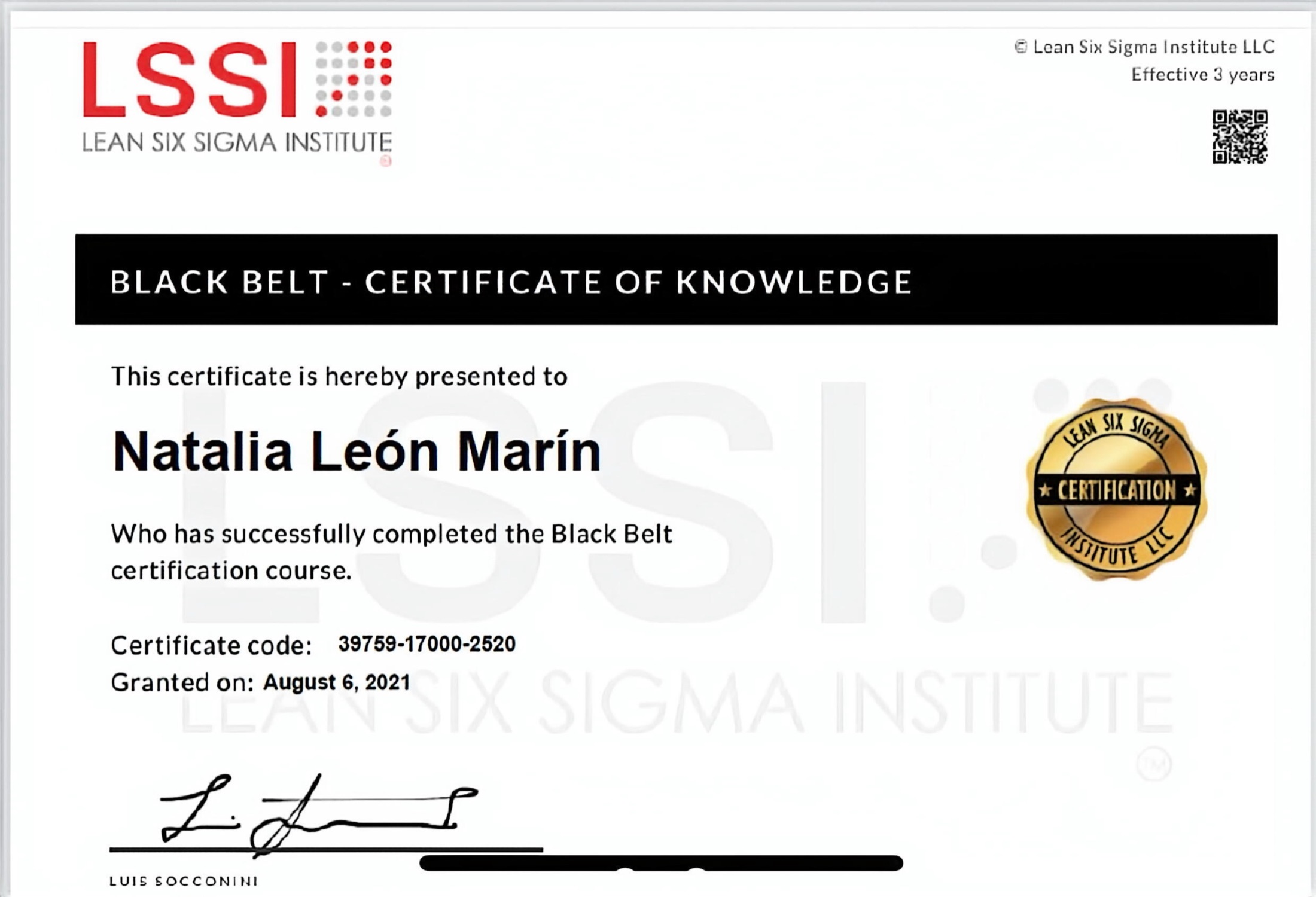
Results from Natalia León's work in manufacturing, not from consultancy clients. See her full track record →
Engineering based on evidence.
Each project follows a structured methodology inspired by scientific research, materials engineering, Lean Six Sigma, and project management.
Hover over each stage
Understand
We correctly define the problem, scope, objectives, and system context.
Research
We gather evidence through observation, data, documentation, interviews, and process analysis.
Analyze
We apply statistical tools, engineering techniques, and root cause analysis to understand why the problem occurs.
Design
We evaluate alternatives considering impact, risk, cost, feasibility, sustainability, and available resources.
Validate
We test solutions through pilots, experiments, simulations, or indicators before full implementation.
Implement
We plan execution, manage risks, and coordinate the necessary actions to bring the improvement to the real process.
Standardize
We document, train, establish indicators, and define controls to ensure the sustainability of the improvement.
The right tool for every problem.
Frequently asked questions
Discover where your biggest improvement opportunity is.
Initial meeting to analyze your process, identify the main opportunities, and define an evidence-based roadmap to improve productivity, quality, and operational performance.
Legal notice
León & Asociados LLC es una empresa de consultoría profesional registrada en el estado de Minnesota. Ofrecemos dos líneas de solución: (1) preparación de formularios y documentación migratoria, y (2) consultoría en optimización de procesos, análisis de datos, metodología Lean Six Sigma y automatización.
León & Asociados LLC NO es una firma de abogados y ninguno de sus representantes es abogado, ingeniero profesional licenciado (PE), ni asesor legal o financiero.
Las soluciones de preparación migratoria se limitan a la organización y preparación de formularios conforme a las instrucciones oficiales de USCIS; no constituyen asesoría legal de ningún tipo. Las soluciones de consultoría técnica se basan en metodologías de mejora de procesos y análisis de datos; no constituyen práctica profesional de ingeniería regulada.
Para asuntos que requieran representación legal migratoria o soluciones de ingeniería profesional licenciada, León & Asociados LLC recomienda consultar con un abogado de inmigración licenciado o un ingeniero profesional (PE) con licencia activa.
León & Asociados LLC is a professional consulting firm registered in the state of Minnesota. We offer two lines of service: (1) preparation of immigration forms and documentation, and (2) consulting in process optimization, data analysis, Lean Six Sigma methodology, and automation.
León & Asociados LLC is NOT a law firm, and none of its representatives is an attorney, licensed professional engineer (PE), or legal or financial advisor.
Immigration preparation solutions are limited to the organization and preparation of forms in accordance with the official USCIS instructions; they do not constitute legal advice of any kind. Technical consulting solutions are based on process-improvement methodologies and data analysis; they do not constitute the regulated professional practice of engineering.
For matters requiring legal immigration representation or licensed professional engineering solutions, León & Asociados LLC recommends consulting a licensed immigration attorney or a professional engineer (PE) with an active license.
León & Asociados LLC · Professional consulting · Not a law firm or licensed engineering firm · Minnesota, USA